Showing posts with label Item Titles. Show all posts

Monday, February 12, 2018

Etsy Search: Titles - Sending the Right Signals

Can you reach every buyer with one title?

writing titles for etsy listings
Best practices for writing item titles

The new "machine learning" algorithms simulate how people look for things in real life. Think about it: they search for the few items that are tailored to a particular need.  

Buyers seek a specific item (not something that fits the needs of the entire vintage-buying population on earth...) 

Use your title to speak to the perfect buyer for that item. No need to worry about everyone else, as they are not buyers.


Speak to your target market


This goes back to basic marketing: who is your target market? You cannot reach everyone with one title. Narrow your target audience.

If you try to market your items  to everyone, you will hold back your shop. Besides, no one can afford to market to everyone. Not even huge companies.

Think about the commercials you see on sports events,  versus those you see on Saturday morning cartoons... Yes, different markets.

The importance of natural wording


Search engines prefer natural wording. But that is not the only reason to use it.

Consider the increasing importance of voice search. Many people now own and use Alexa or Google Voice.

(Indeed Artificial Intelligence is already in use, helping people to find what they are looking for online.)

Users of this technology speak their search terms. If necessary, they refine their search query. They tell the device what they want, using natural spoken English language. The words used are called "LSI keywords" in SEO-speak. (There will be more about LSI keywords in an upcoming post.)

Search engines look for topic and context rather than exact words. Real people do too. So write titles for real people. 

How do I reduce my bounce rate?


Make your listings appeal to the people your title is set up to attract. Use keywords and buyer phrases that are relevant to your target customers. 

Make shoppers comfortable. Convince them that you are knowledgeable and trustworthy. This is easier if you specialize in what you sell.

Here are more ideas for keeping buyers in your shop.

Why is it bad to use the same word combinations over and over in titles?


Some sellers get into the habit of using similar word combinations over and over again in their item titles. When you do that, you miss out on marketing to buyers who use different terms to search for your items.

Mix it up. I know it sounds crazy, but varying the wording of your titles could make a big difference in getting found. Change up your word combinations. What kinds of terms does your target audience use? Use a purchase phrase list.


One word that it is OK to have in every item title is the word "vintage." Do avoid placing the word "vintage" in the valuable real estate right at the beginning. Put it after the first five or so words.


What about "word salad" titles?


Avoid stuffing your titles with keywords. Although this may have been encouraged in the past, Etsy is switching over to artificial intelligence, or AI. "Stuffed" titles will no longer be rewarded in search.

AI is dealing with one searcher at a time. There is no benefit to stuff your titles with terms that make it unclear exactly what your product is. (An example is naming every possible holiday gift your item could be. Instead, aim for niche, long-tail searches.) 

Etsy's AI scours the site looking to match up searchers and the items they search for. When your title is unclear, AI will find lots of clear titles that do match what it is looking for. Those items get moved up in search. The “muddier” titles get pushed down in ranking.


Etsy admin answers questions about titles


Now let us look at some information from the horse's mouth, so to speak. Etsy has been moving toward AI for a couple of years now. 

In October of 2016 Etsy Administrators fielded many questions from sellers about getting items found in searches. Here are a few questions answered about titles:


Q: Is it acceptable to repeat a word in the title?
Admin: We don’t recommend repeating a word [the same word over and over] in the title.

Q: Must word phrases [keywords] within Titles and Tags match exactly?

Admin: Word phrases within titles and tags don’t need to match exactly. However, tagging your product for “red boots” and having “red boots” in your title will give you a better chance of ranking for “red boots”.

Q: If using commas within a title, is it recommended to put one space after the comma?

Admin: In general, we recommend making your titles as readable as possible while still being descriptive. This would usually involve putting a space after commas when appropriate. Google definitely rewards well crafted, easy to read titles.

Q: I would like to ask why is it SOOO important to use the same keywords and combinations in your title, in the description and again in the tags. .... We are constantly working to improve our internal search practices though and eventually we hope to not rely as much on the quantity of times you use a certain phrase when listing your product.

Interesting video about search says that Etsy is no longer weighting the beginning of the title more than the end. (Google still does, and the beginning is what buyers see, so do not discount the beginning of your titles altogether.)

https://www.youtube.com/watch?v=fb-oZNJD-QI

----------------------------

What signals are you sending with your titles? Are you reaching your target market? 

More on item descriptions next...

Wednesday, December 13, 2017

December 2017 Updates from Etsy's CEO

Etsy's CEO Josh Silverman
On December 13, Etsy CEO Josh Silverman updated Etsy sellers.  He also shared information in a video on December 5, 2017.

Here are some highlights about search improvements.

First, from his earlier video chat:
In September, we introduced a major improvement called Context Specific Ranking, or CSR. Through CSR, we’re personalizing the search experience by using information about the shopper, time of day, and other context-specific factors to rank results in real time… The more personalized approach means that you’ll no longer see the same results every time you type in a search term. And the good news is that we’re already seeing CSR drive more sales.
 We’re also working hard to get better at understanding what your item actually is, based on all of the information in your listings, with less focus on your titles. Eventually, as search continues to improve, our goal is to enable you to include all the relevant data about your products as you list them, reducing the need to continuously refine your SEO terms.
Let us break this down a bit.
 "...you’ll no longer see the same results every time you type in a search term."
That means that doing test searches to determine ranking of our items is no longer possible. Every time someone searches, they will see something different.

This is where Josh introduced the term "CSR" or "Context Specific Ranking."
Through CSR, we’re personalizing the search experience by using information about the shopper, time of day, and other context-specific factors to rank results in real time.
He let sellers know that any need to stuff item titles full of keyword phrases is fading:
We’re also working hard to get better at understanding what your item actually is, based on all of the information in your listings, with less focus on your titles.  
He finishes this section with this statement:
Eventually, as search continues to improve, our goal is to enable you to include all the relevant data about your products as you list them, reducing the need to continuously refine your SEO terms.
This is good news if you dislike tweaking listings. It means more time to pick great vintage to sell, right?

Adjustments to search and discovery


Regarding improvements to search and discovery, this continues to be a major focus for us. As I mentioned in my video, in addition to rolling out context-specific ranking, or CSR, we’re working hard to get better at understanding what your item actually is, based on all of the information in your listings, including image recognition, with less focus on your titles. Eventually, our goal is to have you design your title and item description in a way that most appeals to customers. We’ll keep you posted on our progress.
 We boost new shops and new listings in relevant search for a very brief time to give them a chance to be seen. After this quick boost the new items will appear as they normally would in search results. This practice, which is common in ecommerce and retail in general, has been in place on Etsy for the past few years.
 I’d like to address search “clumping,” which has been a hot topic lately. Our system limits the number of listings per seller that can return within the first few pages of results for any given query. This allows us to help buyers experience the breadth of items available on Etsy, which, as we’ve learned through data and testing, increases the likelihood they’ll make a purchase. We’ll continue to analyze the data to make sure we’re helping buyers find what they’re looking for within our diverse collection of listings. We need to do a better job at delivering Breadth, and not just Depth. I agree this is an area where we need to improve, and we are making significant investments to do so.
…the search algorithm, the way we match search terms to listings hasn’t changed and our guidance remains the same, including recommendations for keywords, titles, and categories. What has changed is how we rank search results. Through context-specific ranking, we’re personalizing search rankings in real-time using information about the shopper, time of day, and other context-specific factors. This new approach is leading to an increase in sales in the marketplace. 

Now we will break it down a bit.
Etsy sellers now can host more photos
Etsy recently added five photo fields
...In addition to rolling out context-specific ranking, or CSR, we’re working hard to get better at understanding what your item actually is, based on all of the information in your listings, including image recognition, with less focus on your titles.
Fill out all of your attribute fields (things like color, size, capacity, style, occasion). Include lots of pictures, as image recognition is on the horizon. Think about it, the more photos you have the more chances to be matched up with a buyer's search!
We boost new shops and new listings in relevant search for a very brief time to give them a chance to be seen. After this quick boost the new items will appear as they normally would in search results.
Our system limits the number of listings per seller that can return within the first few pages of results for any given query. This allows us to help buyers experience the breadth of items available on Etsy, which, as we’ve learned through data and testing, increases the likelihood they’ll make a purchase.
Clumping is the new normal. You can be sure that Etsy would not be doing it unless it resulted in increased sales over all.

guessing at Etsy's search changes
Best practices are the same
What are sellers to do? Has anything changed? Josh addresses that:
…the search algorithm, the way we match search terms to listings hasn’t changed and our guidance remains the same, including recommendations for keywords, titles, and categories. 
Etsy's "best practices" have not changed. (As always, use a variety of long-tail keywords. Use concise titles and accurate tags. Those are the best ways right now to capture different queries that buyers might make.) Try this prototype team for an improved way to find Etsy's categories.
What has changed is how we rank search results. Through context-specific ranking, we’re personalizing search rankings in real-time using information about the shopper, time of day, and other context-specific factors. This new approach is leading to an increase in sales in the marketplace. 
But how search results are served up has changed. There is that term "CSR" again. How items are placed in search are personalized (using information about the shopper, the time of day and other factors to be sure).

Josh Silverman is saying that he has the shareholders' backs. And sellers, as there would be no marketplace without them.

Happy selling!

Thursday, July 20, 2017

July 2017 Admin Update for Sellers

Etsy search algorithm factors
On July 20 an update was held for a few Etsy sellers in positions of team leadership. Admin answered some questions. This is a condensed version.
---------------------------------------------------------------------
Etsy remains committed to Etsy teams. More team captains and leaders will be invited to join the Fellowship program [which is located on Facebook] this year.

Q. What effect do hearting games have on Etsy's search algorithms?
A. (The information provided by admin duplicates what was said during the public Q&A post on Etsy.) If a buyer clicks, favorites, or purchases an item found in search results, that has a positive effect on that items search ranking.
Q. Do conversion rates affect search ranking?
Conversion rate affects search results on Etsy
Lower conversion rates are better
A. Yes, conversion rates do affect search ranking.

Q. Is a fee increase in the works for sellers?
A. No.

Q. Regarding the 10 photos per listing, if not all 10 photos are used, will this reduce search ranking?
A. No. The number of photos used has no impact on search placement.

Q. Why have sales have plummeted for sellers this year?
A. Etsy admin understand that fluctuations in sales are scary. Unfortunately, there are many causes. There is no general trend; it is SHOP specific.

Concerned shops that have decreasing sales may contact Etsy. A team of Etsy admin can do a 15 minute shop critique to increase sales. The link is in the Help pages. Shop owners should click on the contact button in that Help section to request a critique.

Q: (Re-questioned): you are saying that there is no Etsy trend that is affecting sales… It goes back to the individual shops? That the experimenting that seems to be affecting sales, is not having an effect on sales?
A: As part of the recent realignment, Etsy now has a dedicated group of admin (called Voice of the Consumer) who are listening to all channels to hear from sellers…

Q: Some feel that morale among sellers on Etsy is at an all-time low. Shop owners could use more timely information from Etsy.

A: We are currently working on better communication plans. We will communicate better with our sellers. This week there are lots of meetings going on at Etsy about being more transparent to sellers. We are working to be better at letting sellers know testing and experiments, ones that are working and not working.

😎 Thanks to long-time Etsy vintage sellers Gail and JD for the above information!

Monday, April 10, 2017

Long tail keywords: delving deeper

big fish in small pond of search results
There has long been a debate about how to best get found in online searches. Focus on (short-tail) head terms or long-tail keywords?

This is some basic information on the subject.

Little fish in a big pond, or a big fish in a little pond?

Here is an interesting blog post. It provides compelling data for the cause of long tail keywords.

After analyzing 1.5 billion (with a “b”) Google searches, the author came up with some interesting statistics:
  • 14% of Google searches use 1-2 words.
  • 22% of Google searches use 3 words.
  • 23% of Google searches use 4 words.
  • 42% of Google searches use 5 or more words.

So about 85% of all Google searches use three or more words (which are known as long-tail keyword searches). That is reason enough to focus on your long-tail keywords.


Okay. I see that long-tail keyword searches are popular. So what?


As queries get longer, their search volume plummets: “96.54% of all search queries in the US have less than 50 searches per month." The proverbial pond is indeed small.

You should aim to be the so-called big fish in this small pond of search results. There are millions of small ponds, or low-volume web searches out there being made. Searches made by shoppers looking to buy your unique item.

Because these long-tail searches are so, well, LONG, we have some hope of being at the top of results. We can be right there, ready to reel in buyers. (Oh, wait a minute. I am getting my illustrations mixed up, ha ha.)

"…around 40% of all searches [worldwide] are coming from billions of long-tail keywords that have less than 50 searches per month."

Are we the big fish in a small pond?
Pulling in searchers for one or two small “ponds” of search results is one thing. But there are millions of small ponds of 50 searches. If we can rank as the big fish for many of them, positive results can add up.

Takeaway


Aim to be that “big fish” of top search results in many small ponds. Increase your long-tail reach. Refine your long-tail search terms. Use lots of them by writing rich content for your listings. "Own" those small ponds of long-tail search terms.

Who has lots of time to invest in refining key word search terms? Vintage sellers often sell a large variety of items. This another time when the advantage can be for sellers who specialize. They can better target their market with search terms.

Be the big fish. Own those small search ponds. Use various search phrases to try to increase the reach of your shop or website.

Harness the power of long-tail keywords. Draw in as many searchers as possible to your listings.

Sell, sell, sell!

Saturday, December 3, 2016

Etsy Search: what is keyword stuffing?

Etsy titles turkey monkeyI've been stuffed after a big dinner. However, I keep hearing about keyword stuffing my Etsy titles and even descriptions. What is that all about?
Keyword stuffing is using many unnatural word combinations in our titles (and text). For years now, Google has been penalizing content with keyword stuffing. Yet many sellers still encourage using every space in our title that Etsy gives us. Why? Because Etsy search has been unintentionally rewarding such practices. The more exact search phrases you used, the more chances to be first in search results. 
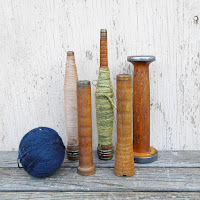
Primitive spindle bobbins
How Do I Title This Listing?
Here is an example: I sell antique wooden things, including bobbins from Maine. How should I describe them in my description? 
"Primitive Bobbins - Antique Wooden Spindles - Weaving Spools"
Or "Antique Bobbins / Primitive Wood Bobbins / Rustic Wooden Bobbins from Maine / Antique Weaving Tool / Prim Quills with Wool / Old Bobbins / Etc Etc Etc."
Etsy admin has recently stated that the "search algorithm [will] no longer favor stuffed titles [in order] "to be more aligned with Google's best practices." Google search sees right through such practices, and already penalizes your search results in Google. However, Etsy will be cracking down on doing this as well.
This subject was directly addressed in Etsy's last SEO Admin Question and Answer seminar in October, 2016. Let's get the information right from the source.

Q: Listing titles: keyword stuffing or user friendly?

Some people recommend using every one of our 140 characters in the title and repeating phrases exactly the same as the tags, with the main word repeated multiple times eg:
Beaded Bracelet / Green Bracelet / Boho Bracelet / Handmade Bracelet (and so on.)
On the other hand, optimizing titles for Google Search is a little different:
Brooklyn NY traffic on BQE
We all want to direct traffic to our listings
No one wants to read a list of words. Write your <title> tag text in natural language, making it as compelling to the human reader as possible. 
  • Use no more than 70 characters, including spaces
  • Keep it unique between pages
  • Avoid "keyword stuffing"
Is it possible to achieve a happy medium?
Admin: while we recognize that incentives do exist for sellers to stuff our titles for internal search purposes, they do not follow Google’s best practices. We are working to improve our internal search algorithm to no longer favor stuffed titles, to be more aligned with Google’s best practices. While there isn’t an immediate fix, this is on our radars and we will be communicating when we make the change. Thanks!
---------------------------------
Update on February 6, 2018:
Still wondering if keyword spamming is really a bad practice? 
 "in October 2016, they wanted to improve Etsy search so that title stuffing was no longer beneficial [link]. As of Feb. 2018, we still aren't there yet, but I am seeing some signs of it heading in that direction."
---------------------------------
Update on June 16, 2018

More details about why title stuffing is no longer working.

Tuesday, November 8, 2016

Tags for relevancy, admin answers

For sellers, "Etsy Relevancy" is critical. We want our items to appear when buyers search. And we want them at the top of search. That's not asking much, is it?
etsy admin answers

First, what is a tag?


Tags are words or short phrases, your most important search terms. Etsy listings have 13 tag slots, each with 20 spaces. 

When shoppers search, they type in keywords. Tags (and titles) are examined and relevant results are displayed. Tags are a powerful tool to draw in buyers. Always use them all.

Q: Must word phrases [keywords] within titles and tags match exactly?

Admin: Word phrases within titles and tags don’t need to match exactly. However, tagging your product for “red boots” and having “red boots” in your title will give you a better chance of ranking for “red boots”.


Q: Is it necessary to tag my items with the same phrases used in my titles? If so, what do I do if the phrase is longer than the 20 characters allowed in the tags?


Admin: We recommend using the same keywords in titles and tags for the most important keywords, and targeting other keywords where it makes sense. The tradeoff between the two is either super stressing one keyword vs. the possibility of showing up for others.

If the phrase is longer than 20 characters, we'd recommend breaking it up if possible.

screenshot etsy compose listing tags

Tag! You are it, the tagging expert now. How are your tags?

Selling vintage in uncertain times

With coronavirus, we have seen supply chain disruptions, stock market fluctuations, even companies temporarily stopping business. The news s...